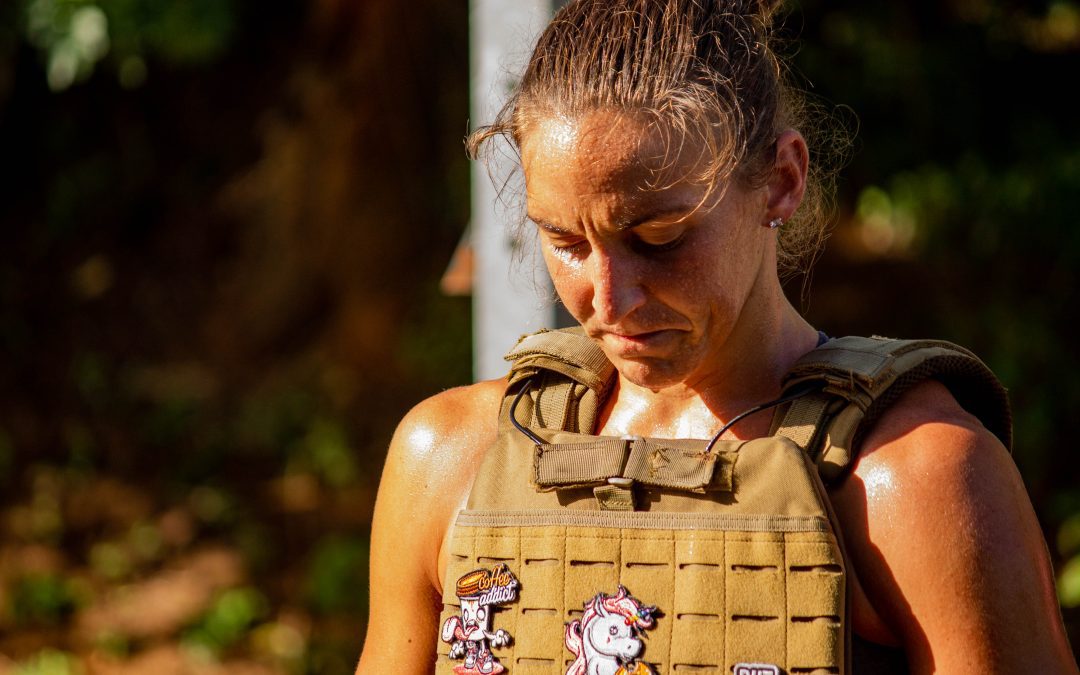
Category: Exercise

  • Chiropractor meets CrossFit.

    Chiropractor meets CrossFit.

    The new year approaches and you might be setting some goals when it comes to fitness. Looking to spice it up and really challenge yourself alongside some really fun and motivated humans? Ever tried CrossFit? Oh no, I can’t do CrossFit for x, y, z reasons. Sound familiar?

    As a medical practitioner, what are my thoughts on this “cult” as some may say, or this ridiculous type of intense training? It is one thing as a chiropractor to treat cross-fitters, but to be one myself? Through personal observation, I do believe that some healthcare practitioners have a dig at CrossFit, and I have had a few patients present to me saying “my last practitioner told me to stop CrossFit,” however, their ailments weren’t even CrossFit related. Huh? I guess I’m giving myself permission to scrutinize this topic and unpack my point of view because I use to be on the fence about this “CrossFit thing” a few years ago BEFORE I had even tried it. We all make up preconceived ideas about something by what we read on the internet (including ranting blogs that have no research foundations), or by someone else’s experience, whether good or bad. All these opinions dictate our outlook on something without ever being exposed to it correctly.

    All experiences are relative. 

    So, this is my outlook of CrossFit based on the research I’ve been exposed to, and this is MY experience as a crossfitting chiropractor. I encourage you to take a moment and read on (it’s lengthy), but I do believe you’ll really learn something and gain some insight into one of the world’s fastest growing sports, and maybe even sign up and give it a try in the New Year.

    C6052043 7DC7 4C70 B615 B91614AB4F32 1

    So what is CrossFit actually? Let’s break it down for a better understanding because I don’t believe that the word “cult” should be used as a substitute for an individual’s lack of understanding of why a group of people are eager to workout together. CrossFit is high-intensity interval training coupled with resistance training, elements of powerlifting, and gymnastics. It is constantly varied, high-intensity, functional movement that aims to prepare the body for the unknown and the unknowable (Glassman, 2007). It incorporates a lot of what is already practiced in various sports or training programs, from rowing, swimming, running to squats, deadlifts, snatches and so much more; the difference: the high-intensity methods utilised (Smith et al., 2013). Basically in summary, ‘our specialty is not specializing’ (Glassman, 2007). I personally like to think of CrossFit as the kingpin of all cross-training, hence the term ‘CROSSfit’. You never do the same thing or combination of movements twice, unless you walk in, quickly peer across to the board and it reads some female name like Fran, Grace, or Annie. You know how hurricanes are named after females? Well, that gives you an indication of the havoc that is about to unfold when the countdown begins, 3…2…1… But let’s continue with the research. 

    Breaking down the definitions further, CrossFit is focused around “constantly varied, functional movements”. These are movements involving universal motor recruitment patterns, performed in a wave of contraction from core to extremity and they are compound movements, i.e. multi-joint. Basically, the best type of joint movement when performed correctly (I will get to the technique later). This type of training involves gymnastics which increases strength, suppleness, and agility (Adamson, 2007), as well as power and weightlifting. Hedrick and Wada (2008) stated that the greater skill complexity required for weightlifting exercises facilitates the development of a broader physical abilities spectrum, which is transferred to improvements in athletic performance. Furthermore, they went on to explain the numerous benefits of weightlifting including the following: Biomechanical, neuromuscular, fiber adaptions and benefits; increased lean body mass; neuroendocrine adaptions; improved balance, coordination, flexibility, and kinesthetic awareness. 

    So all this, yet CrossFit has some sort of negative stigma attached to it especially amongst healthcare practitioners. Well, it wouldn’t be fair-minded if I sat here writing about all the good stuff from a biased perspective. How about I unpack the stereotypes and “negative implications” for you; the poor technique, the overuse, the crazy intensity, and the rhabdomyolysis. Heard these attached to the word CrossFit before? Most certainly. 

    A6F04279 B477 4EBB AD9B A2B95627E3CB

    Yes, CrossFit is high intensity which often means that movements are completed against time and frequently with heavy weights in many reps and sets. Generally, this leads to a state of fatigue, and accompanied with this, improper technique. But most certainly NOT always. Heavy lifting does require great technical skill and form due to high spinal loads (Hedrick and Wada, 2008). Therefore improper technique holds great risk for injury development, particularly to the low back ranging from strains to herniated discs (Lavallee and Balam, 2010). “You see, exactly my problem with CrossFit. Too much emphasis on getting through the workouts in a set time and not enough focus on form and technique.” Yup, I’m sure some of you were thinking along these lines. That’s okay, I use to say this too, and to some extent, still do.

    And then there is rhabdomyolysis. Rhabdomyolysis is the rapid breakdown and destruction of skeletal (moving) muscle resulting from intense athletic activity (medicine.net, 2018). The injured muscle cells subsequently leak into the circulation and cause electrolyte abnormalities and acidosis (Rathi, 2014). Insert a great deal of muscle pain, weakness, and potential hospitalisation. Sounds extreme right? However, in 2005, Glassman reported 5 cases of CrossFit induced rhabdomyolysis, FIVE, all of which made a recovery and returned to CrossFit training. Another study in 2013 (Hak, Hodzovic and Hickey) looked at the prevalence of injuries during CrossFit training where no cases of rhabdomyolysis were reported. CrossFit can be intense, yes, but so are a lot of other sports and activities. The overall risk is minimal especially if the individual understands their body limitations. 

    Now that I’ve laid out the scrutiny of the negative, I have some rhetorical questions for you. Is there any sport that is injury-free? If CrossFit is so heedless, then why do most strength and conditioning coaches, as well as Biokineticists incorporate these exact movement standards into their patient/client training programs? If you’ve been to most regular gyms lately (not CrossFit affiliated), they have a “workout of the day (WOD)” presented for regular gym-goers to challenge themselves, or training classes structured around a very similar, if not identical program design. Is this not CrossFit? Hmmm…

    Photo 2

    EVERY sport has flaws, and every sport has a risk of injury. Injuries are expected at any competitive level. We CANNOT prevent injury. There is no way to guarantee that. People get hurt. Accidents happen. Even the most prepared athletes can experience injury. But we CAN reduce the risk of injury by making our bodies better at adapting to stress and load. Now when it comes to CrossFit, how does one manage and reduce injury risk? Well, this is where all my negatives were disintegrated. Being part of an affiliated CrossFit box, with certified CrossFit coaches, providing high-quality program design, and implementing good technique patterns – injuries are not as common as I originally thought.

    Qualified coaches ensure that members need to be set up for functionality and success; there is injury surveillance and introspective input of how much is too much when it comes to fatigue and potential technique issues. Yes, we spoke about lifting heavy weights for many reps and sets, and the fact that fatigue sets in leading to improper technique. Thankfully CrossFit is diverse and this is not always the case, and actually never has to be either. CrossFit can be scaled meaning it can be adapted to be less intense based on a persons abilities and the presence of any incorrect movement patterns or injuries. You DO NOT HAVE to lift heavy weights. You do not have to walk on your hands or climb a rope. The beauty of CrossFit is adaptation. I read an article where one healthcare practitioner said, “There is no way inexperienced people doing this are not going to get hurt.” Yes, that is what experienced, certified CrossFit coaches are for and why people are encouraged to do CrossFit at affiliated CrossFit boxes, not regular gyms. I am inexperienced at rock climbing, hence if I rock climb without adequate guidance, I am sure I’ll come off second best. This makes logical sense. Coaches are there to guide you accordingly in this array of challenging movements. If you can’t perform a regular bodyweight squat with proper technique, you shouldn’t be using a loaded barbell, simple. But that is also not ONLY the coach’s responsibility, it is YOURS too. Get good at moving your body WELL before you move it fast and under too much load. We also have a level of responsibility when it comes to training.

    IMG 2794

    The human body can be pushed to do UNBELIEVABLE things and CrossFit provides a platform for that to unfold. The magnitude of skill required is complex enough to humble you in one way or another. CrossFit embodies its own language from WOD, AMRAP, EMOM, RFT, The Open, bear complex, RX, scaled to Sally Up. It encourages sweat, commitment, accountability, and hard work, and it is a gathering place for like-minded individuals to be challenged, whilst having a good time. You won’t only come into the gym for training, you will enter into a fitness family. Yes, you can get injured but that is not CrossFits’ fault and it is not the coach’s fault either, that is called personal responsibility! We all have physical boundaries and limits, know them well, and be aware of them.

    If you want to take the CrossFit thing too far, that’s your choice. Trust me, your EGO will get you injured a lot quicker than CrossFit will.

    We cannot demonize a particular sport. There are MULTIPLE factors that accumulate to produce stress and injury. Don’t blame CrossFit or even regular gym for a shoulder injury when you’ve been dancing your way around poor movement patterns, poor posture, and strength imbalances for ages. 

    This is not me promoting CrossFit from the comfort of my computer screen, this is me giving you my experience from both sides of the fence, and providing you with the information you need to drastically alter your perspective. CrossFit may not be for everyone, but I doubt that’s because of your body type, as some will say, and I truly hope it isn’t because you were too proud to try. 

    The next time we find ourselves criticising something based on preconceived ideas gathered from the internet, whether it’s CrossFit or any other form of exercise or sport, let’s think again and rather experience it firsthand for ourselves, then make your decision.

    This is me, the CossFitting chiropractor, who would rather condition my body to be functionally prepared for the unknown and unknowable, than be efficient at a single joint static movement or just for the sake of trying to “look” good. 

    9D0884A8 BE48 4F2B A4C8 BC10BB688797

    Photo’s by Nick Beswick, Daniel Osch, and Tyrone Harris.

  • The Big C…omrades! And 5 other “C’s” that might help you.

    The Big C…omrades! And 5 other “C’s” that might help you.

    It is that time of the year again, an influx of runners in my office, increasing the mileage as Comrades qualifiers approach and the month of June draws closer. As promised from my last blog “Sportsmen or women? This read is for you” I want to dive into different sports focuses over the next few months, with the Comrades Marathon being my first event of choice.

    Based on my own private practice experience, which I know is only 3.5 years, this is my feedback, advice and hopefully helpful tips for you thus far, together with some input from some of my patients. Please note, this is just my broad-spectrum analysis. I am fully aware that during your Comrades’ journey you will receive advice from a hundred different people but FIND WHAT WORKS FOR YOU. These are just points to be aware of and to consider. And with that said, don’t read this and then go change everything, that in itself can lead to disaster. If these tips are helpful, start making the necessary changes over time.

    [ CROSS TRAINING ]

    The biggest ‘error’ I have personally noted is patients dropping every other activity just to increase running mileage. “I can’t surf anymore because I need to run instead.” “I don’t want to strength train because it makes me too bulky for Comrades.” Like I’ve quoted before, the best way to prevent injury is by staying diverse with your movement demands! We need to work through a wide range of physical literacy challenges in order for different systems and tissues to be stressed without being overstressed. Yes, I understand that you need running mileage, but what is the point of all the mileage if you develop a stress fracture or medial tibial stress syndrome? Running is a LINEAR sport, but the forces applied during running are not just sagittal or in a straight line. If you don’t incorporate movements that make you stronger in the frontal and transverse planes, you may just end up with an ITB (iliotibial band) syndrome. 

    Balance practice, core endurance, and strength training will drastically reduce your chances of developing running injuries, especially whilst training for ultra-marathon distances. Why balance practice? Running is one foot at a time, and you are constantly changing loads, therefore this is a skill we need to develop and possess. Why core endurance? Most issues that occur deep into a run stem from hip and core stability mechanisms fatiguing. Why strength training? It really helps to have strong, activated gluteal and lower limb muscles. Resistance is key to ensuring that our joints can handle the repetitive stress from km’s of running. Did you know that running can create forces up to 3x your body weight with each foot strike? Your Achilles tendon, for example, is loaded 3.4x your body weight during walking but 7.7x your body weight when running. And this resistance training doesn’t refer to light weights and high reps. Another reason why lower body strength and trunk control (core) is important is that the majority of runners are heel strikers. Research shows that rearfoot striking increases stress on the body to a much greater degree than those who are mid, to forefoot strikers. The stronger you are, the harder you are to hurt. 

    Photo 17

    [ CONDITIONING ]

    If your friends dare you to do the Comrades marathon in a couple of months and you’ve never run more than 10km’s, maybe not the wisest decision you’ll ever make. Conditioning is of vital importance for reducing injury risk. As discussed above, running subjects the body to an increased, repetitive load with every foot strike. Be smart and realistic about your goals. Just because someone believes you can do the Comrades, doesn’t mean you have to enter the upcoming one and prove you can achieve it. It is a 90KM ROAD ULTRA MARATHON. Yes you might complete it, but at what cost? We all know there are some super humans that beat all the odds, run a dozen Comrades marathons with minimal preparation and still manage to avoid injuries or knee surgery, but those individuals are few and far beyond. 

    So what do I mean by conditioning? According to the Britannica Encyclopaedia, “conditioning, in physiology, is a behavioral process whereby a response becomes more frequent or more predictable in a given environment as a result of reinforcement, with reinforcement typically being a stimulus or reward for a desired response.” So, if Comrades is your goal (and by that I mean a successful Comrades as injury-free as possible), then get a few half marathons under your belt first. Once you’ve done that, allow the mileage to climb again and then get very comfortable with doing a marathon, or two. And I don’t mean this happens all in a few months. Comrades is not running away (yes I know what I did there), you have plenty of years ahead to prep for an event of this magnitude. And besides, research shows that peak running performance occurs later in your 30s and/or with the correct conditioning over the years. With that said, if you are very conditioned in the marathon department, this is great, however, when picking your qualifier marathon, don’t pick 4. Too many people exert themselves 110% over a few marathons, instead of strategically planning for one or two. You cannot always expect your body to show up for that many marathons. 

    36638800 10160530736830858 7930338872167235584 o 1024x680 1

    [ CORRECT EATING – NUTRITION ]

    I decided to consult the beautiful Mariella Sawyer for this section, a top South African triathlete and dietician (e-mail her at hello@mariella.co.za for more information). Her pointers include:

    • Everyone is an individual and different things/food work for different people so stick with what YOU know. 
    • Race intensity influences how well your body can digest food. The higher the intensity, the less blood goes to your gut, meaning that digestion becomes a lot more difficult. This is why easily digestible carbs such as gels are often the go-to for those racing at higher intensities. 
    • Hydration is key! Electrolytes are important and dehydration is often the cause of cramps, stomach stitches, nausea, vomiting and a decline in performance. 
    • PRACTICE MAKES PERFECT! Practice your race-day nutrition during long runs and figure out what works best for you. 
    40749467 10155574445497377 5412410730064379904 o 683x1024 1

    [ CONSERVATIVE CARE ]

    Of the thousands of individuals that run the Comrades Marathon, I always wonder how many see a chiropractor or get regular sports massages during their training, 10% maybe? And I don’t mean visits to either due to running injuries, I am just referring to maintenance care, maybe more like 5%? I always think it’s fascinating that when our shoes reach a certain mileage and are worn out (which happens pretty quickly when training for an ultra-marathon), we get new ones. In most cases, not because they are causing injuries, but because we have come to terms with the level of wear and tear they are exposed too. We do this, yet we fail to get our bodies treated regularly during this time. I am sure our bodies are the ones withstanding the constant impact of the weekly increased running mileage. Respect your body during this time, its training to achieve a huge goal. 

    Book a sports massage TODAY if you haven’t had one. Flush out those toxins, give the body some TLC and celebrate it for all the efforts it has achieved thus far. If you haven’t seen a chiropractor, make an appointment with one TODAY too. “But why do I have to see a chiropractor if I don’t have any reason too?” Well, why do you service your car every 15 000kms if there’s nothing wrong with it? Here are a few pointers taken from my previous blog regarding the benefits of chiropractic care for you.

    Chiropractic care improves movement, on a spinal and joint level, as well as overall body movement. Imagine training for the comrades with ankles that don’t move properly? That directly affects the whole gait cycle and can lead to numerous lower limb enthesopathies, like ITB syndrome and shin splints. 

    Better Balance and heightened body awareness. Chiropractic care restores balance to the entire body through correcting nervous system disturbances and allowing signals to flow freely between the brain and the body. Upper cervical adjustments have a direct influence on the brain stem. Do you know what the function of the brainstem is? It controls the flow of messages between the brain and the rest of the body and also controls basic body functions such as breathing, heart rate, swallowing, blood pressure, consciousness, whether one is awake or sleepy, and maintains healthy brain function and balance/coordination.

    Increased flexibility. When joints and spinal bones are in proper alignment, you are able to manoeuvre with ease. 

    These benefits, therefore, contribute greatly to preventing injury, relieving body stress inflicted by strenuous training regimes, increases strength and enhancing performance. Seeking chiropractic care is not only about injuries, but it’s also about body function and overall optimal performance. 

    Photo 32 683x1024 1

    [ CELEBRATE ]

    And finally, celebrate the small victories. Celebrate the fact that you are training for an ULTRA MARATHON, and that fact the most of you have probably already successfully completed one, or multiple Comrades marathons. This is a massive achievement and you should be proud of yourself. Too often we fail to celebrate the things we achieve, the things we are capable of conquering, the goals we keep knocking out the park. Too often we forget that many people aren’t able and well enough to achieve something of this caliber, despite deeply desiring too. “Health is a crown that the healthy wear on their heads, but only the sick can see it.” 

    35530722 2100947853265863 498030152647704576 n 768x769 1

    If you want some more perspective, here are a few patient testimonies for you.

    Emari

    “There will be times in the race where you feel great especially at the start but hang back. Then there will be times in the middle where you will feel like the finish line is incredibly far away and all you can think about is how much everything hurts. But then you will see someone you know or you have a snack or you walk for a bit and you will eventually start feeling a bit better, just hang in, you will get there. 

    On the up run, I felt so ill in the first half and couldn’t eat anything and could only drink water. I got to halfway and wanted to cry, it just seemed so far, but I had a rehydrate and just kept going only drinking water and what I felt I could stomach. I took some walk breaks and eventually felt better and was able to start eating again in the second half and my latest km of the whole race was the last one because I couldn’t believe I was actually finishing. Once I got to the top of Polly shorts, I knew I would make it. 

    The down run is much more of a mental battle about the distance. Running over 90kms in mentally insane. I got to 60kms and it felt impossible that I still had another third of the race to do. But because there is quite a bit of downhill in the last part, you just have to keep moving forward, and running into Durban is amazing! So much support and you are running home. Best advice – lots of vaseline and remember to take in the experience instead of just focusing on the time on the clock.”

    b283d85d 3a15 41b1 9b4c 84f1ab0a94f5

    Sam

    Everyone is different, you will get so much advice on pacing, nutrition, etc, but no one knows your body better than you, listen to it. You will hit a wall or two and you will get over it. Your mind is powerful and if you can get over the wall, you will finish the race (if you have put in the work). Find inspiration from your surroundings – there are some boring bits and long hauls – look around and find distractions, take part in traditions and talk to people around you, even if you get nothing back, encouraging someone else may be the encouragement you need. 

    916efb25 5466 4a00 95f7 8e414c4e936e 768x1024 1

    Nicole

    My Comrades marathon journey in 2018 started as a daunting experience, stepping into the unknown and venturing into a sport and distance I know very little about. The best advice I received was to listen to one person’s advice and stick to one training plan. Thanks to my coach, Glen Gore, I was able to follow a manageable training plan and get as much advice from him as I wanted, as often as I wanted it. Throughout my 5 month build-up to Comrades, I did no other training besides running and swimming. I was incredibly conscious of the amount of physical work I was putting my body through so I made sure I booked a chiropractic appointment with Dr. Bezuidenhout every second week and sometimes every week depending on my training load. Due to the fact that I have a physical job where I am sometimes on my feet for up to 9 hours a day, I was very aware of the load I was placing on my legs. I didn’t do any form of gym or weight training during my 5 month training period, so I relied on swimming as my cross-training. It definitely helped massively with recovery, with getting rid of lactic acid after big runs, kept my core and upper body strong and gave me an opportunity to rest my legs. Being in the water also has a massage effect, so swims helped me to feel relaxed and physically relieved after running, at no extra expense. Although I have been injury-prone my whole life, I did not get injured once throughout all of my Comrades training and I suffered from no pain or injuries on race day. If I can give one piece of advice, it’s the advice I received – choose one plan and stick to it. 

    46459246 2326556357371677 3732455420652945408 n 1 768x769 1

    Big love,

    Doc Lol x